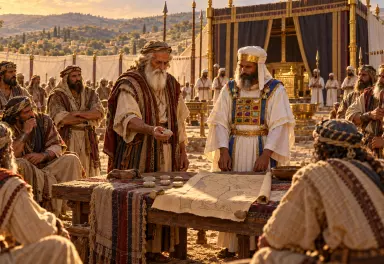
A herança da meia tribo de Manassés
Josué 17:12-13
12 Yet the Manassites were not able to occupy these towns, for the Canaanites were determined to live in that region.
13 However, when the Israelites grew stronger, they subjected the Canaanites to forced labor but did not drive them out completely.
Imagem para compartilhar
Leia no contexto
Josué 17:9-16 — o versículo junto com o que vem antes e depois.
- 9 Then the boundary continued south to the Kanah Ravine. There were towns belonging to Ephraim lying among the towns of Manasseh, but the boundary of Manasseh was the northern side of the ravine and ended at the Mediterranean Sea.
- 10 On the south the land belonged to Ephraim, on the north to Manasseh. The territory of Manasseh reached the Mediterranean Sea and bordered Asher on the north and Issachar on the east.
- 11 Within Issachar and Asher, Manasseh also had Beth Shan, Ibleam and the people of Dor, Endor, Taanach and Megiddo, together with their surrounding settlements (the third in the list is Naphoth ).
- 12 Yet the Manassites were not able to occupy these towns, for the Canaanites were determined to live in that region.
- 13 However, when the Israelites grew stronger, they subjected the Canaanites to forced labor but did not drive them out completely.
- 14 The people of Joseph said to Joshua, "Why have you given us only one allotment and one portion for an inheritance? We are a numerous people, and the Lord has blessed us abundantly."
- 15 "If you are so numerous," Joshua answered, "and if the hill country of Ephraim is too small for you, go up into the forest and clear land for yourselves there in the land of the Perizzites and Rephaites."
- 16 The people of Joseph replied, "The hill country is not enough for us, and all the Canaanites who live in the plain have chariots fitted with iron, both those in Beth Shan and its settlements and those in the Valley of Jezreel."
Compare traduções
Josué 17:12-13 nas traduções mais lidas. Toque na sigla para abrir a página daquela tradução.
- NVI
Mas os manassitas não conseguiram expulsar os habitantes dessas cidades, pois os cananeus estavam decididos a viver naquela região. Entretanto, quando os israelitas se fortaleceram, submeteram os cananeus a trabalhos forçados, mas não os expulsaram totalmente.
- NVT
Contudo, os descendentes de Manassés não conseguiram ocupar essas cidades, pois os cananeus estavam determinados a permanecer naquela região. Mais tarde, quando os israelitas se tornaram fortes o suficiente, submeteram os cananeus a trabalhos forçados, mas não os expulsaram completamente.
- NAA
E os filhos de Manassés não puderam expulsar os moradores daquelas cidades, porque os cananeus persistiam em morar nessa terra. Quando os filhos de Israel se tornaram fortes, sujeitaram os cananeus a trabalhos forçados, porém não os expulsaram totalmente.
- ARA
E os filhos de Manassés não puderam expulsar os habitantes daquelas cidades, porquanto os cananeus persistiam em habitar nessa terra. Sucedeu que, tornando-se fortes os filhos de Israel, sujeitaram aos cananeus a trabalhos forçados, porém não os expulsaram de todo.
- ARC
E os filhos de Manassés não puderam expelir os habitantes daquelas cidades, porquanto os cananeus queriam habitar na mesma terra. E sucedeu que, engrossando em forças os filhos de Israel, fizeram tributários aos cananeus, porém não os expeliram de todo.
- NTLH
Mas o povo de Manassés não conseguiu expulsar os moradores dessas cidades, e por isso os cananeus continuaram a morar nelas. E, mesmo quando os israelitas se tornaram fortes, não expulsaram todos os cananeus, mas os obrigaram a trabalhar para eles.
Ver todas as traduções (14)
- ARC 1969
E os filhos de Manassés não puderam expelir os habitantes daquelas cidades: porquanto os cananeus queriam habitar na mesma terra. E sucedeu que, engrossando em forças os filhos de Israel, fizeram tributários aos cananeus; porém não os expeliram de todo.
- AA
E os filhos de Manasse não podérão expellir os moradores daquellas cidades: porquanto os Cananeos querião habitar na mesma terra. E foi qne, esforçando-se os filhos de Israel, fizerão aos Cananeos tributarios: porem não os expellirão de todo.
- AR
Contudo os filhos de Manassés não puderam expulsar os habitantes daquelas cidades, porquanto os cananeus persistiram em habitar naquela terra. Mas quando os filhos de Israel se tornaram fortes, sujeitaram os cananeus a trabalhos forçados, porém não os expulsaram de todo.
- KJA
Mas, como os filhos de Manassés não conseguiram tomar posse dessas cidades, os cananeus continuaram a habitar nessas terras. Contudo, quando os filhos de Israel se tornaram mais fortes, submeteram os cananeus a trabalho forçado, mas não os expulsaram de todo.
- BEB
But the children of Manasseh were not able to make the people of those towns go out; but the Canaanites would go on living in that land. And when the children of Israel had become strong, they put the Canaanites to forced work, in place of driving them out.
- ASV
Yet the children of Manasseh could not drive out [the inhabitants of] those cities; but the Canaanites would dwell in that land. And it came to pass, when the children of Israel were waxed strong, that they put the Canaanites to taskwork, and did not utterly drive them out.
- ACF
E os filhos de Manassés não puderam expulsar os habitantes daquelas cidades; porquanto os cananeus queriam habitar na mesma terra. E sucedeu que, engrossando em forças os filhos de Israel, fizeram tributários aos cananeus; porém não os expulsaram de todo.
- BLIV
Mas os filhos de Manassés não puderam lançar aos daquelas cidades; antes os cananeus quis habitar na terra. Porém quando os filhos de Israel tomaram forças, fizeram tributários aos cananeus, mas não o expulsaram.